Broken Torsion or Extension Springs
A broken spring may leave the door too heavy for the opener or for safe manual lifting. Springs are under high tension and require the correct tools, dimensions, and replacement procedure.
Serving Fort Meade, Florida
Get a stuck, crooked, or unresponsive garage door assessed before further operation causes more damage.
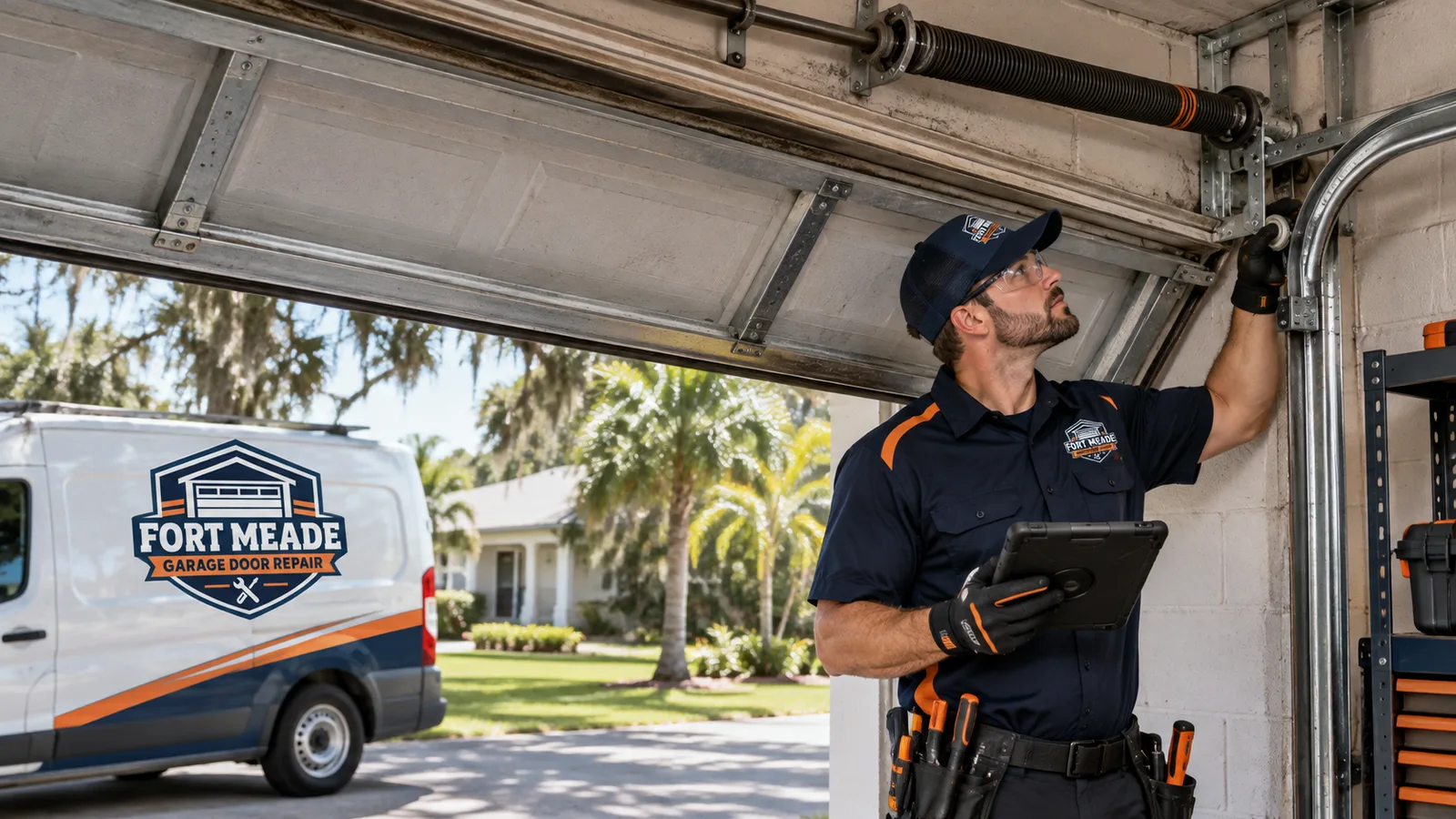
When a door will not open, will not close, or hangs at an angle, emergency garage door repair in Fort Meade, FL can restore access and secure the opening. Fort Meade Garage Door Repair handles urgent problems involving broken springs, loose or snapped cables, displaced rollers, bent tracks, damaged panels, and openers that have stopped moving the door.
A failed garage door can trap a vehicle or leave a home, rental, workshop, or commercial property exposed. Do not keep pressing the opener if the door is crooked, making harsh grinding sounds, or lifting only on one side. Repeated operation can pull rollers out of the track, damage the opener, or allow a door with lost spring tension to fall.
During each visit, our garage door specialists serving Fort Meade, FL identify the failed part, make the opening safe, and explain the necessary repair before work begins.
A broken spring may leave the door too heavy for the opener or for safe manual lifting. Springs are under high tension and require the correct tools, dimensions, and replacement procedure.
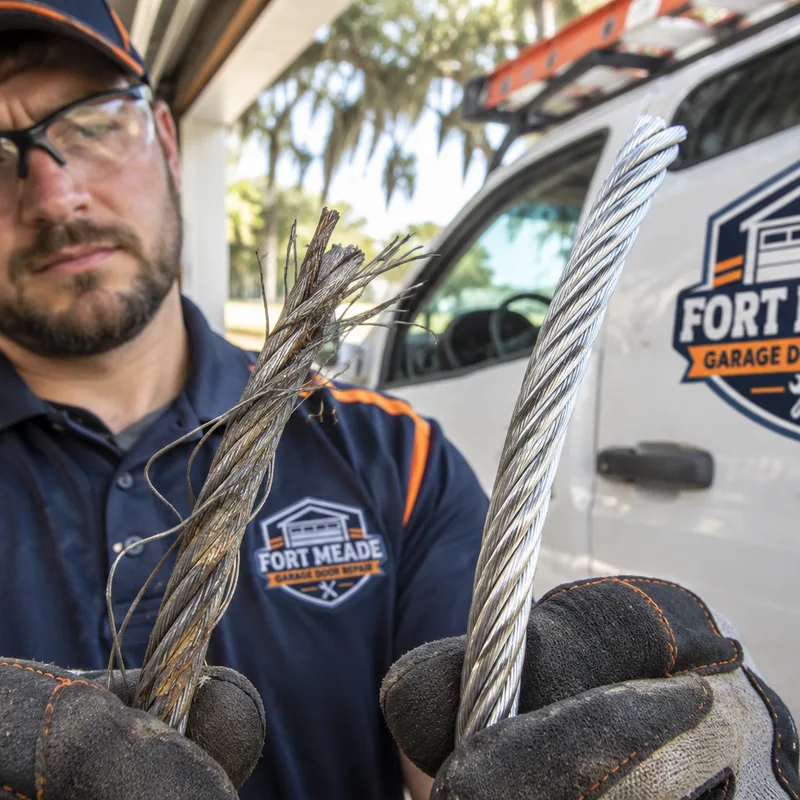
A cable failure can make one side rise faster than the other. Stop operating the door if a cable is frayed, hanging loose, or off its drum.
A roller outside the track or a visibly tilted door can become unstable. The door should be supported and its tracks, rollers, hinges, cables, and brackets checked before movement resumes.
An opener may hum, click, reverse, or remain silent. Testing separates electrical, control, sensor, travel-limit, trolley, and mechanical door problems.
An impact can bend a panel, loosen hinges, or force the track out of alignment. Repair depends on whether the damage affects safe travel or the structural support between sections.
Photo-eye alignment, track obstruction, damaged rollers, incorrect limits, or binding hardware can prevent closure. The cause should be confirmed rather than bypassing a safety device.
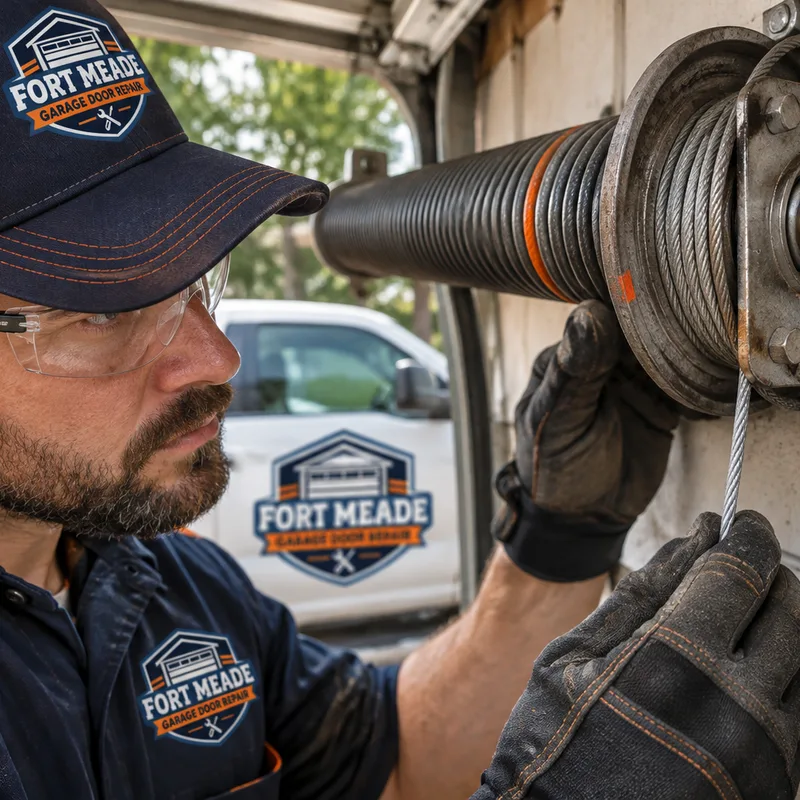
Keep people, pets, and vehicles away from the opening. If the door is suspended, crooked, or partly off its tracks, do not stand beneath it or attempt to push it into position. Avoid touching springs, cable drums, bottom brackets, or loose cables because these parts can retain substantial tension.
If the door is fully closed and stable, leave it closed. If it is open and appears unstable, clear the area rather than trying to lower it. Do not pull the emergency release while a spring is broken or the door is hanging unevenly; disconnecting the opener may remove the only restraint on a heavy door.
Florida thunderstorms can cause power interruptions and opener control problems. After power returns, check whether the opener has power and whether anything blocks the photo eyes near the floor. Stop if the motor runs but the door does not move, or if the door moves unevenly. Those symptoms point to a mechanical problem rather than a simple remote-control issue.
Step 1 of 5
Tell Fort Meade Garage Door Repair whether the door is open, closed, crooked, off track, or trapping a vehicle. Mention any loud bang, loose cable, impact damage, or opener noise.
Step 2 of 5
The assessment should cover springs, cables, drums, rollers, hinges, tracks, brackets, door balance, and the opener. This helps distinguish the failed component from damage caused after the failure.
Step 3 of 5
Before repair, the door must be supported so it cannot shift unexpectedly. The exact method depends on its position, weight, spring system, and track condition.
Step 4 of 5
The failed part is repaired or replaced, related hardware is set correctly, and tracks are aligned when the condition calls for it. Parts must match the door and its lifting requirements.
Step 5 of 5
Final checks include manual balance, full travel, cable seating, roller movement, opener force and limits, photo-eye response, and the auto-reverse function when an opener is involved.
A garage door problem is not always limited to the first broken part. When a torsion spring breaks, the opener may have been strained by attempts to lift the unbalanced door. When a cable comes off a drum, the cause may be a broken spring, damaged bearing, obstructed track, or a door that was already out of level. An impact to one panel can also disturb hinges, rollers, and vertical track alignment.
The correct repair accounts for door weight, spring type, track configuration, shaft and drum condition, and opener operation. Replacement springs must be sized for the door rather than selected by appearance alone. Cables need to seat correctly in their drums, and both sides should carry the door evenly. For opener problems, the mechanical door is tested independently before the motor, rail, trolley, controls, limits, and safety sensors are evaluated.
Heat, humidity, wind-driven rain, and storm-related outages in Central Florida can expose worn electrical connections and corroded hardware. These conditions do not prove the cause of a failure, but they belong in a practical inspection when an exterior garage door suddenly stops operating.
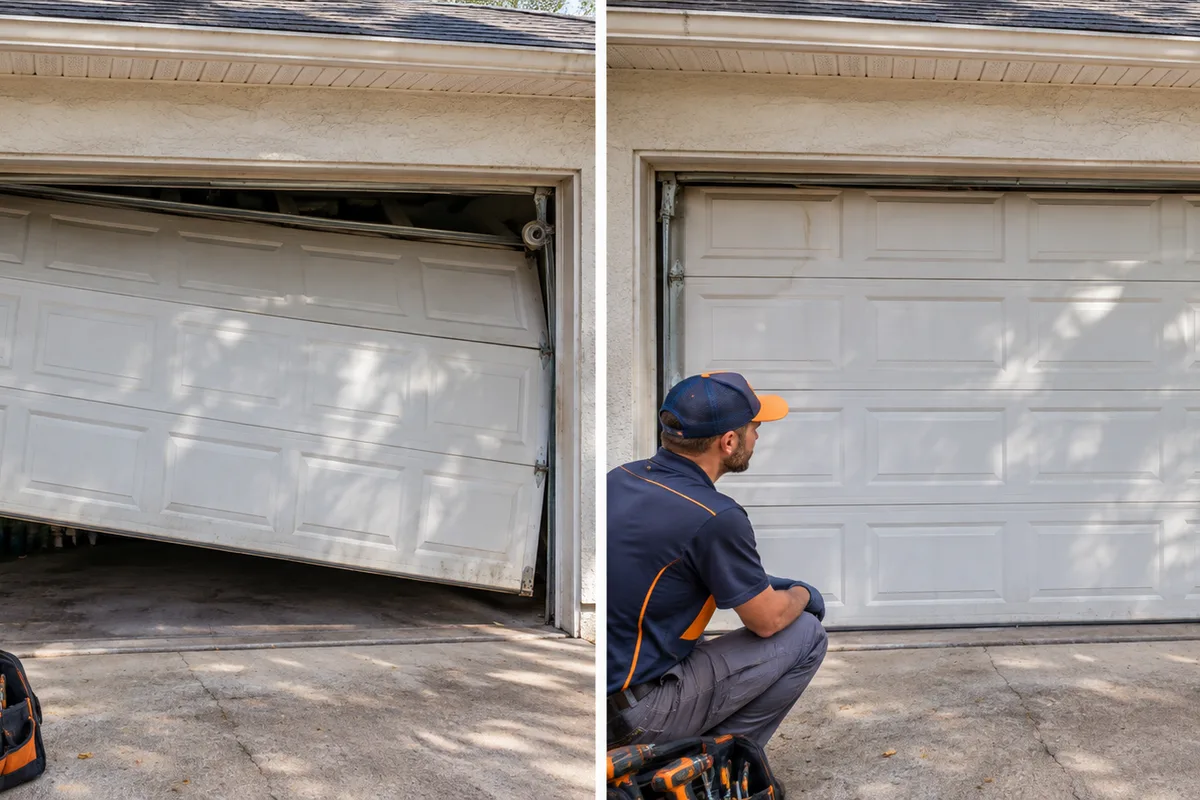
A door that is hanging unevenly or stuck open can become more dangerous with each attempted cycle. Arrange an assessment before operating it again.
CALL NOW: (863) 285-3637Do not operate a garage door with a confirmed broken spring unless a trained technician has stabilized it. The door may weigh hundreds of pounds, and the opener is not designed to replace the spring's lifting force. If a vehicle is trapped at a Fort Meade property, tell Fort Meade Garage Door Repair the door's position and condition so the access problem can be assessed safely.
Yes, a garage door stuck open warrants prompt service when it leaves property exposed or the door is unstable. Keep everyone clear if cables are loose, rollers are out of the track, or one side hangs lower. Central Florida rain and wind can also affect belongings and electrical equipment inside an open garage.
An off-track door can often be repaired when the sections, tracks, and supporting hardware remain serviceable. The technician must identify why it left the track, such as an impact, cable problem, damaged roller, obstruction, or misalignment. Severe panel deformation or damaged track supports can change the repair plan.
The opener may have a disconnected or damaged trolley, stripped drive component, broken spring, failed cable, or another mechanical fault. Stop running it until the door is checked. Continued operation can damage the opener when the door is too heavy or jammed.
The spring setup and condition determine whether one or more springs should be replaced. On a two-spring torsion system, both springs have usually completed the same number of cycles, so the intact spring should be inspected and the replacement options explained. Correct spring sizing depends on the door's weight and geometry.
Describe whether the door is open or closed, whether it sits level, and whether a vehicle is trapped. Also mention visible gaps in a spring, loose cables, bent tracks, impact damage, unusual noises, and the opener's response. This gives Fort Meade Garage Door Repair a clearer picture of the immediate safety and access issue.
Tell Fort Meade Garage Door Repair what the door is doing, where it is positioned, and whether access is blocked. An inspection identifies the failure and establishes a safe repair plan.