Opening and Clearance Check
The opening width and height are measured along with side room, headroom, backroom, floor level, and the condition of the framing. These measurements determine which track and spring configurations fit.
Serving Fort Meade, Florida
Plan a new garage door around the opening, your preferred material, daily use, and opener setup, then have each component fitted as one complete system.
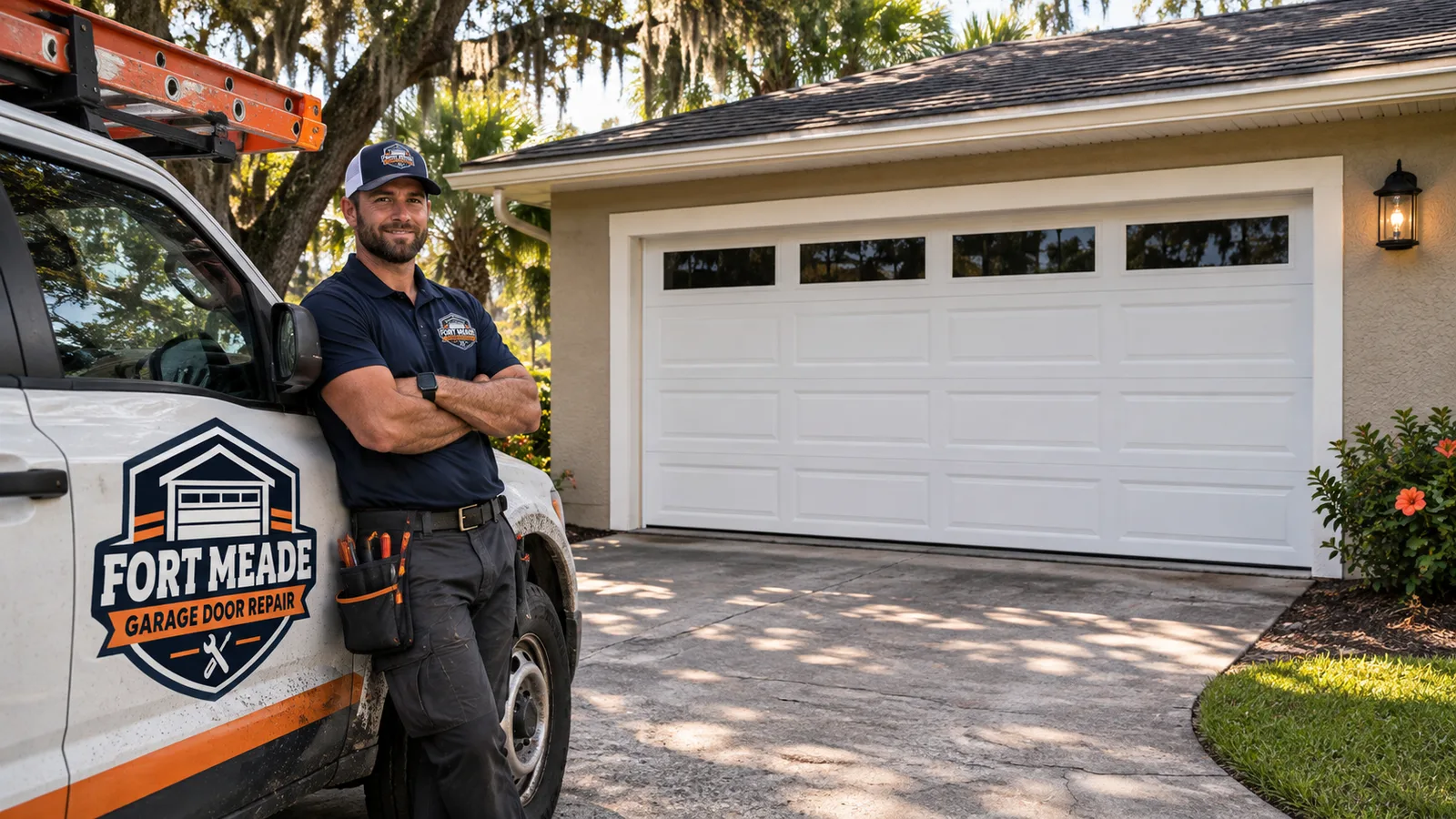
Garage door installation in Fort Meade, FL starts with accurate measurements and a clear understanding of how the door will be used. Fort Meade Garage Door Repair helps property owners choose a door, track system, spring setup, hardware, and opener that work together. The goal is a properly fitted system that travels smoothly, seals around the opening, and suits the building.
Before installation begins, Fort Meade's garage door specialists can discuss the opening, available headroom, door material, insulation, windows, exterior finish, and opener controls. This planning is useful whether the project is part of new construction or the replacement of an existing door.
Central Florida heat, humidity, heavy rain, and wind-driven debris all affect material and finish choices. A corrosion-resistant factory finish, suitable perimeter seals, and properly anchored track hardware can help a new system handle local conditions. Wind-load requirements may also affect the door model, reinforcement, and attachment method. The applicable permit and product-approval requirements should be confirmed for the specific Fort Meade property before work starts.
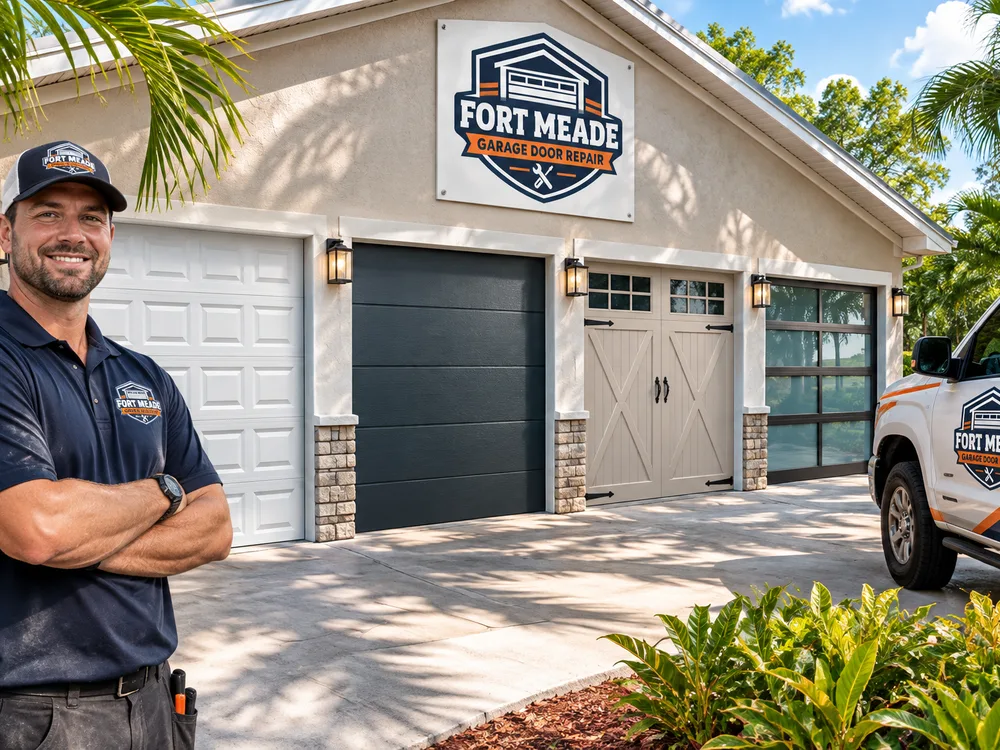
Sectional overhead doors are made from hinged horizontal panels that travel on vertical and horizontal tracks. Steel is a common choice because it offers many panel profiles, colors, and insulation configurations. Aluminum and glass can suit a contemporary design, while wood and wood-look finishes provide a warmer appearance with different maintenance needs.
Insulation is usually described by R-value, but the construction of the entire door matters. A single-layer door has one exterior skin. Double-layer and triple-layer doors can add insulation and an interior backing, which may improve panel rigidity and reduce heat transfer. For an attached garage, insulation and effective seals may matter more than they do for a detached storage building.
Design choices include raised or recessed panels, flush panels, carriage-house styling, decorative hardware, and window inserts. Window placement affects daylight, privacy, weight, and appearance. The door should also complement the opening dimensions and roofline rather than relying on a catalog image alone.
The opening width and height are measured along with side room, headroom, backroom, floor level, and the condition of the framing. These measurements determine which track and spring configurations fit.
Panels, hinges, rollers, vertical tracks, horizontal tracks, brackets, and the top fixtures are assembled and aligned for the selected door.
Torsion or extension springs counterbalance the door's weight. Spring selection must match the installed door because material, insulation, windows, and reinforcement can change that weight.
A bottom seal and perimeter stop help close gaps around the opening. The floor condition is checked because a low spot or uneven slab can prevent the bottom seal from making uniform contact.
When an opener is included, the rail, motor unit, arm, controls, photoelectric sensors, travel limits, and force settings are installed and tested with the door.
The completed door is checked for balance, smooth travel, track alignment, hardware security, manual release operation, sensor response, and automatic reversal.
Step 1 of 5
Fort Meade Garage Door Repair checks the opening, framing, clearances, floor, electrical access, and intended use. Existing components are assessed if the project involves replacement.
Step 2 of 5
Door size, material, panel construction, finish, windows, track type, spring configuration, seals, and opener options are set out before ordering materials or arranging the work.
Step 3 of 5
The work area is cleared and the opening is prepared for the specified hardware. A replacement project may also require removal of the old door, tracks, springs, and opener.
Step 4 of 5
The door sections and operating hardware are fitted, the counterbalance system is set, and the opener is connected when included. Track position and spring tension are adjusted for controlled travel.
Step 5 of 5
The installer cycles the door, checks balance and clearances, tests the opener's safety functions, and walks through normal operation and basic care with the property owner.
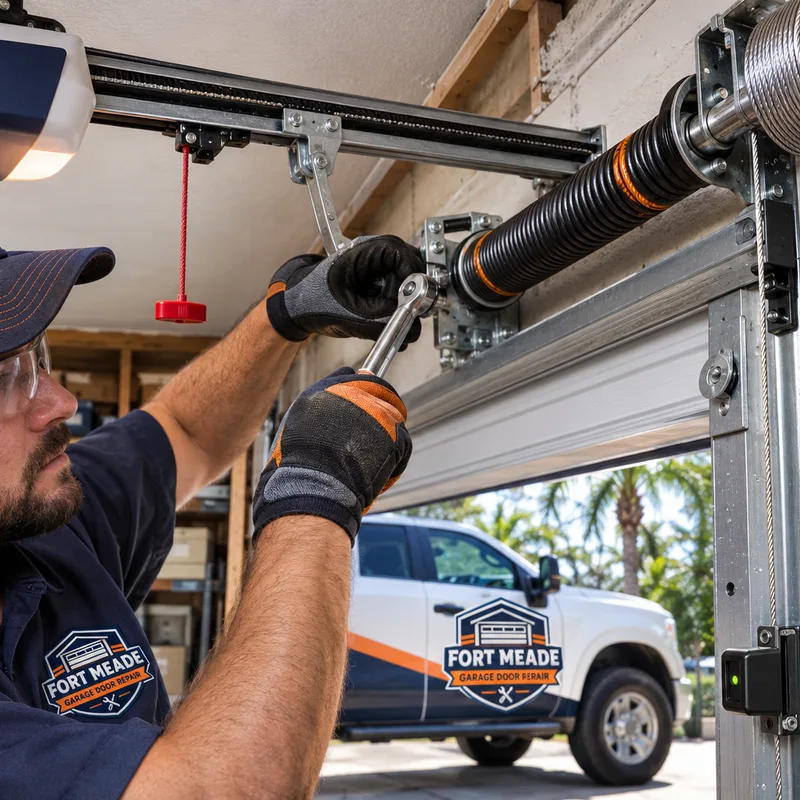
The opener should be selected for the door's size, weight, construction, and expected use. Belt-drive openers are often chosen when quieter operation is a priority. Chain-drive units use a metal chain and may suit owners who prefer that conventional mechanism. Wall-mount openers attach beside the torsion shaft and can preserve overhead space, but they require a compatible door and sufficient side room.
Useful options may include battery backup, exterior keypads, vehicle remotes, lighting, and connected controls. Availability and compatibility vary by model. Photoelectric sensors must be positioned near the floor, aligned, and kept clear. Travel limits and force settings also need to be adjusted after the opener is connected to the installed door.
An automatic opener is not meant to compensate for a binding or poorly balanced door. Before the opener is commissioned, the door should move correctly by hand with the operator disconnected. That check helps separate door balance from motor operation.
A garage door can match the nominal opening size and still operate poorly if the surrounding conditions are overlooked. Plumb jambs, sound attachment points, level track placement, adequate backroom, and correct spring selection all affect movement. Low-headroom conditions may require a different track arrangement. High-lift or vertical-lift configurations are specialized options for buildings with additional ceiling height.
For replacement work, reusing old tracks or springs is not automatically appropriate. Track shape, radius, door thickness, section height, total weight, and hardware design must be compatible. New panels should not be paired with mismatched counterbalance parts simply because the old components appear usable.
Maintenance begins with visual checks. Owners can watch for frayed lift cables, loose fasteners, damaged rollers, torn seals, or a door that no longer stays balanced when operated manually. Springs and cables remain under high tension and should not be adjusted as a do-it-yourself task. Keeping the photoelectric sensor area clear and following the door and opener manufacturers' care instructions supports normal operation.
Bring the opening measurements, style preferences, insulation needs, and opener priorities into one clear installation plan before materials are selected.
CALL NOW: (863) 285-3637Many straightforward residential installations can be completed within one working day once the correct door and components are available. Removal work, framing corrections, specialty track, electrical changes, or a large custom door can require additional work time. Fort Meade Garage Door Repair can set expectations after inspecting the opening and confirming the system.
Insulation is optional, but it may be useful when the garage is attached, used as a workspace, or exposed to strong afternoon sun. In Fort Meade's warm, humid climate, consider the complete door construction, interior backing, perimeter seals, and windows rather than comparing R-value alone.
An existing opener may be reusable if it is compatible with the new door and operates safely. The installer should consider the door's weight, height, balance, travel, opener condition, rail length, safety sensors, and manufacturer guidance. A working motor by itself does not establish compatibility.
The required wind-load design depends on the property, opening, applicable code, and approved door system. Reinforcement is part of a tested assembly that can include heavier struts, end stiles, tracks, brackets, and specific attachment details. The correct product and permit requirements should be confirmed for the project rather than inferred from appearance.
Old tracks and springs should be reused only when their specifications and condition are confirmed as compatible with the new door. Door weight, track profile, radius, spring capacity, and hardware geometry must match. A complete matched system is often the clearer approach when replacing an older door.
Start with the opening size, preferred material, insulation level, exterior style, window preference, and whether a new opener is needed. Also mention low ceilings, storage racks, an uneven floor, damaged framing, or limited electrical access. Those details help Fort Meade Garage Door Repair define a practical scope.
Yes, a garage door can be planned for a new detached garage, workshop, or similar building when the framed opening, clearances, attachment points, electrical layout, and approved door specifications are coordinated. Measuring before the opening is finished can help identify clearance conflicts while they are easier to address.
Tell Fort Meade Garage Door Repair about the opening, the look you want, and how the garage is used. Get a defined scope covering the door, operating hardware, seals, opener options, and installation.